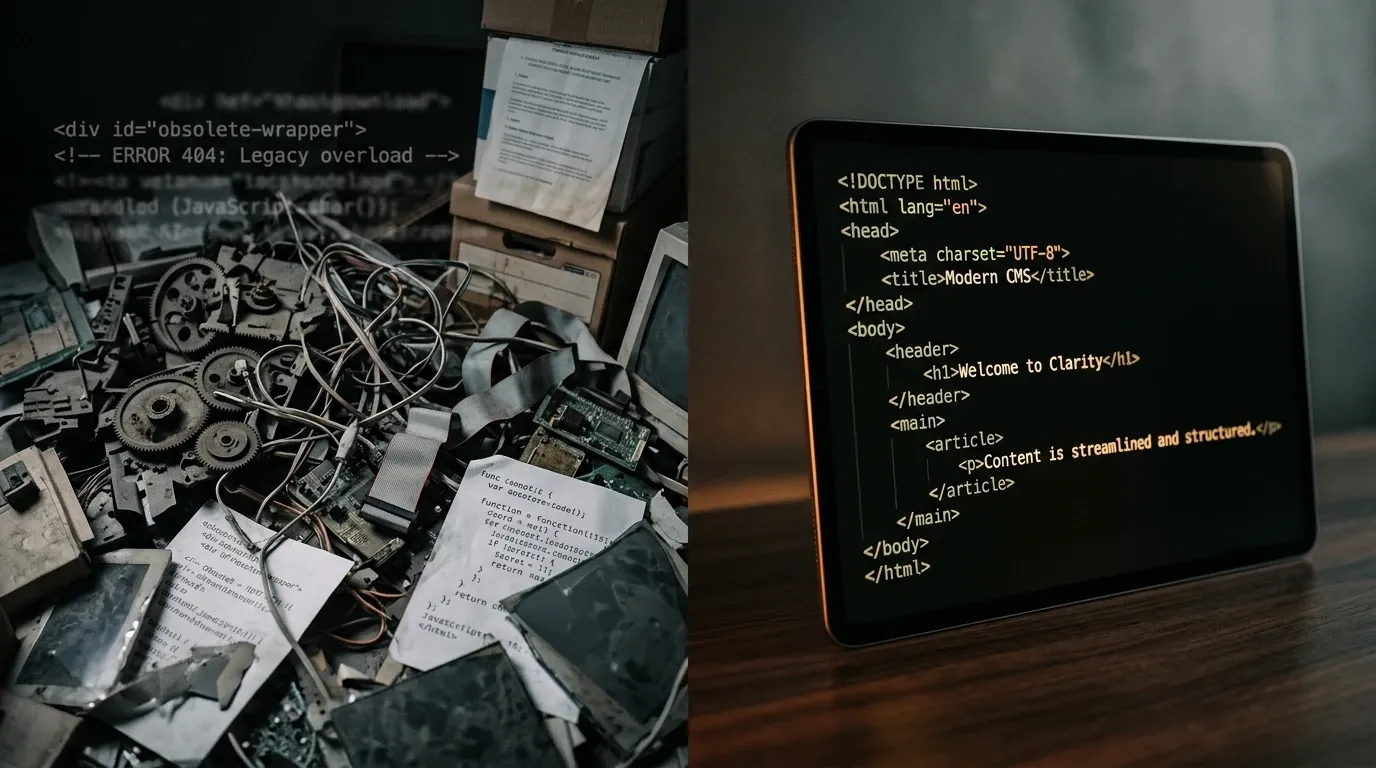
There was a time when WordPress made perfect sense. Install it, pick a theme, add a handful of plugins, customize a few things, and you had yourself a website. It was convenient, flexible, and practically everyone was using it.
But somewhere along the way, WordPress started feeling less like a website platform and more like a full-time maintenance job.
Between legal battles, security vulnerabilities, compromised plugins, PHP problems, and developers constantly releasing patches, I’m starting to wonder why anyone running a relatively simple website would willingly put themselves through all of this.
Personally, I’ve been moving back toward static HTML, and honestly, I haven’t missed WordPress nearly as much as I thought I would.
WordPress Is Becoming More Complicated Than It Needs to Be
Let’s start with the elephant in the room.
WordPress has an enormous ecosystem of developers, themes, plugins, hosting companies, and third-party services. That’s supposed to be one of its biggest advantages. Unfortunately, it’s also one of its biggest weaknesses.
Every plugin you install introduces another piece of software that somebody else is responsible for maintaining. Every theme has its own updates. PHP needs to be maintained. WordPress core needs updates. And your hosting environment needs to support everything.
Now imagine having 20, 30, or even 40 plugins installed.
You’re depending on dozens of different developers to keep their software maintained, compatible, and secure.
What happens when one developer abandons a plugin? What happens when an update breaks another plugin? What happens when a developer introduces a vulnerability and doesn’t release a patch quickly enough?
You’re the one left dealing with the consequences. And that’s getting old.
October 2026 Has Been a Pretty Good Example of the Problem
If anybody needed a reminder of why website security matters, October provided plenty of examples. There have been several incidents worth paying attention to.
PHP Security Vulnerabilities
Two serious PHP vulnerabilities, CVE-2026-109618 and CVE-2026-109619, became a major security concern in October. Exploitation attempts were detected before patches were released.
PHP is widely used across the web, and WordPress depends on it to operate. That means PHP-level vulnerabilities can create another layer of risk for WordPress website owners.
The Rank Math PRO Compromise
The Rank Math PRO 3.0.123 release was compromised with a backdoor. That is particularly concerning because website owners trust official software releases and updates.
UpdraftCentral Security Incident
Stolen connection keys associated with UpdraftCentral were used to compromise connected websites. Even tools intended to help manage and protect websites can become part of a security problem.
“These aren’t theoretical situations. They’re reminders that the software running your website, including the software you trust to maintain it, can become an attack vector.”
And that’s before we even get into the ongoing legal fight involving Automattic, Matt Mullenweg, and WP Engine. The September 2026 court ruling allowing most of WP Engine’s claims to proceed certainly hasn’t helped restore confidence in the ecosystem.
For someone who just wants to publish content and operate a website, all of this creates an unnecessary amount of uncertainty.
PHP Is Another Thing I Don’t Want to Worry About
I don’t hate PHP. It’s a useful programming language, and it powers an enormous amount of the internet.
But do I want my personal blog or a relatively simple business website to depend on a constantly evolving PHP environment, dozens of plugins, and an endless cycle of updates? Not particularly.
PHP vulnerabilities aren’t exclusive to WordPress, but WordPress makes extensive use of PHP. That means its users inherit the responsibility of keeping the entire stack properly maintained. And that’s the part that frustrates me.
I don’t want to wake up wondering whether a PHP update broke something, whether a plugin developer released a security patch, or whether a vulnerability has been discovered in something I installed six months ago.
“I want to work on my website, not babysit it.”
Why Static HTML Makes More Sense to Me
This is where static HTML comes into the picture.
A static HTML website doesn’t need WordPress running in the background. It doesn’t require a PHP application processing every page request. It doesn’t need a database to generate ordinary blog posts or website pages. The browser receives the HTML, CSS, JavaScript, and other assets needed to display the website. That’s it.
No WordPress administration dashboard exposed to the internet. No database connected to the website for routine page delivery. No collection of server-side plugins waiting for their next update.
And perhaps my favorite part? I’m not waiting on a plugin developer to fix something before I can feel comfortable using my own website.
If I need to change something, I change the code. If I need a new feature, I build it or integrate a service that does what I need. If something breaks, I can inspect the actual files instead of trying to figure out which plugin is fighting with another plugin.
There is a level of control here that I really appreciate.
Less Software Means Less to Maintain
One of the biggest advantages of static HTML is the smaller application attack surface.
Think about a typical WordPress installation:
- WordPress core.
- A theme.
- Multiple plugins.
- PHP.
- A database.
- An administration dashboard.
- Login functionality.
- Third-party integrations.
- Additional scripts and dependencies.
Every additional component introduces something else that might need maintenance or security attention. With static HTML, a lot of that simply disappears.
I’m not saying static websites are magically immune to hacking. Hosting accounts can still be compromised, credentials can still be stolen, and JavaScript libraries and external services still need attention.
But removing an entire server-side application and its associated database from a straightforward website eliminates several categories of problems. That’s a trade-off I’m more than happy to make.
I Don’t Need a Developer to Keep My Website Running
This might actually be my favorite reason for moving away from WordPress.
I’m tired of depending on developers to maintain software that I depend on to operate my website.
- A plugin developer decides to stop supporting a product? Now I have to find an alternative.
- A plugin update breaks something? Now I have to troubleshoot it.
- A developer takes weeks to address a vulnerability? Now I’m waiting.
- A theme changes its pricing or licensing? Another decision I don’t control.
With static HTML, I have much more control over the actual website. I can edit the files, manage my own code, host the website, and deploy changes when I want.
GitHub-based deployment and static hosting also make it possible to maintain a website without constantly logging into a traditional hosting control panel.
For somebody comfortable working with HTML, CSS, and JavaScript, that’s a pretty attractive arrangement.
WordPress Still Has Its Place, But Does Everyone Need It?
I understand why people use WordPress.
If you’re operating a large online store, membership platform, complicated publishing operation, or a website where nontechnical staff need to manage content every day, WordPress can still make a lot of sense.
But I think we’ve reached a point where people install WordPress for websites that really don’t need it.
- A personal blog doesn’t necessarily need a database-driven CMS.
- A business website with five pages doesn’t necessarily need 25 plugins.
- A documentation website doesn’t necessarily need a complicated administration system.
- A simple community resource website doesn’t necessarily need an entire PHP application running behind it.
Sometimes a collection of well-organized HTML pages is all you need.
“We’ve spent years convincing ourselves that every website needs a complicated backend. Maybe it’s time to reconsider that idea.”
Static HTML Isn’t Going Backward. It’s Simplifying Things.
There’s an interesting irony here.
The internet started with relatively simple documents, HTML, and hyperlinks. Over the years, websites became increasingly complicated. Now we’re seeing renewed interest in static site generators, static hosting, Git-based deployments, and lightweight website architectures. And I think there’s a good reason.
People are tired of unnecessary complexity.
They want websites that load quickly, are inexpensive to host, are easier to maintain, and don’t require constant attention. Static HTML gives you a way to accomplish many of those things without carrying the maintenance burden of a traditional CMS.
You still need to take security seriously. You still need backups, protected accounts, sensible deployment practices, and responsible handling of forms and other dynamic services.
But you don’t need to run a database-driven application just to publish a few pages and articles.
My Bottom Line Is That I’m Choosing Control Over Convenience
I’m not interested in arguing that WordPress is dead. It isn’t.
But I do think website owners should take a serious look at how much complexity they’ve allowed into their websites.
- How many plugins are actually necessary?
- How many updates are you installing every month?
- How much time are you spending troubleshooting problems that wouldn’t exist without all those dependencies?
- And perhaps the biggest question: How much of your website do you actually control?
For me, static HTML has become a much more attractive option. I can build what I need, manage the code, deploy my changes, and avoid depending on an endless chain of plugin developers to keep my website functioning.
After everything happening with WordPress, PHP, plugin security, and the legal disputes surrounding the ecosystem, I find myself appreciating simplicity more than ever.
I want to write, publish, build, and maintain my websites. I don’t want another monthly appointment with the WordPress update screen.
Maybe the future of the web isn’t about making every website more complicated. Maybe it’s about remembering that sometimes HTML is all you need.
And honestly, I’m perfectly happy with that.
Related: How Smart Devices Became Our Digital Parasites · Browse Digital Dilemmas · Background: Astro