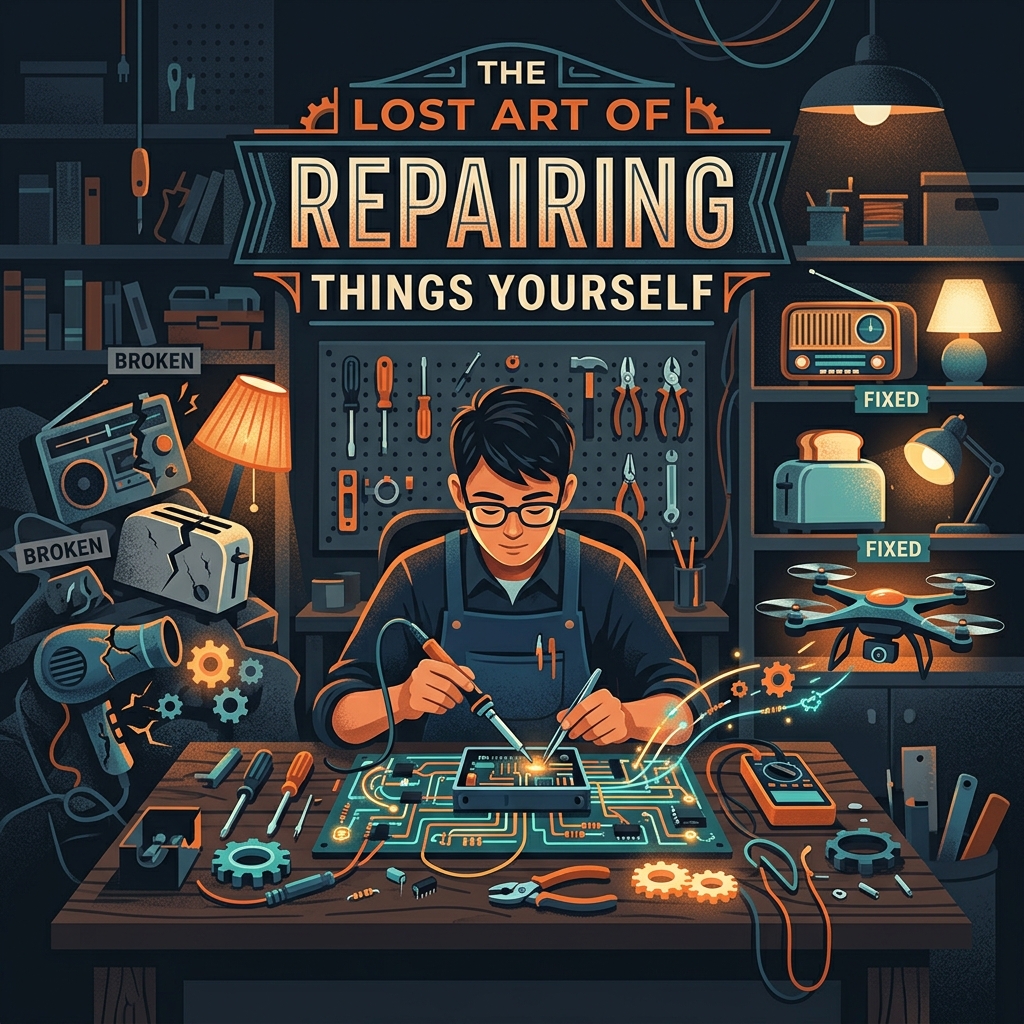
The Throwaway Generation
When a toaster stops heating or a laptop keyboard misses a key, our default impulse has become simple: open Amazon, click buy, and throw the old item into an electronics bin.
We've gradually lost touch with one of humanity's most satisfying traditions: opening things up, diagnosing the problem, and fixing them yourself.
Planned Obsolescence vs. The Right to Repair
It isn't entirely our fault. Manufacturers design modern goods with glued shut casings, proprietary screws, and restricted replacement parts specifically to discourage DIY maintenance.
- Glued Batteries: Making basic battery replacements impossible without specialized heat guns.
- Microchip Lockout: Pairing component serial numbers so third-party repairs disable features.
- No Schematics: Hiding technical manuals so local repair shops are squeezed out.
The Joy of Fixing
When you take a broken lamp, a noisy PC fan, or a stuck bicycle derailleur and troubleshoot it back to life, something shifts mentally. You stop viewing everyday objects as disposable black boxes and start understanding how the world around you actually works.
Getting Started Small
You don't need a degree in electrical engineering to reclaim repairability:
- Invest in a Basic Precision Toolset: A standard precision screwdriver kit opens 90% of household gadgets.
- Consult iFixit & YouTube Tutorials: Millions of step-by-step guides exist for almost every model imaginable.
- Support Right to Repair Laws: Advocate for legislation requiring manufacturers to supply parts and manuals to consumers.