The Honest Donation Dilemma Why Your $20 “Tip” Costs You My Help
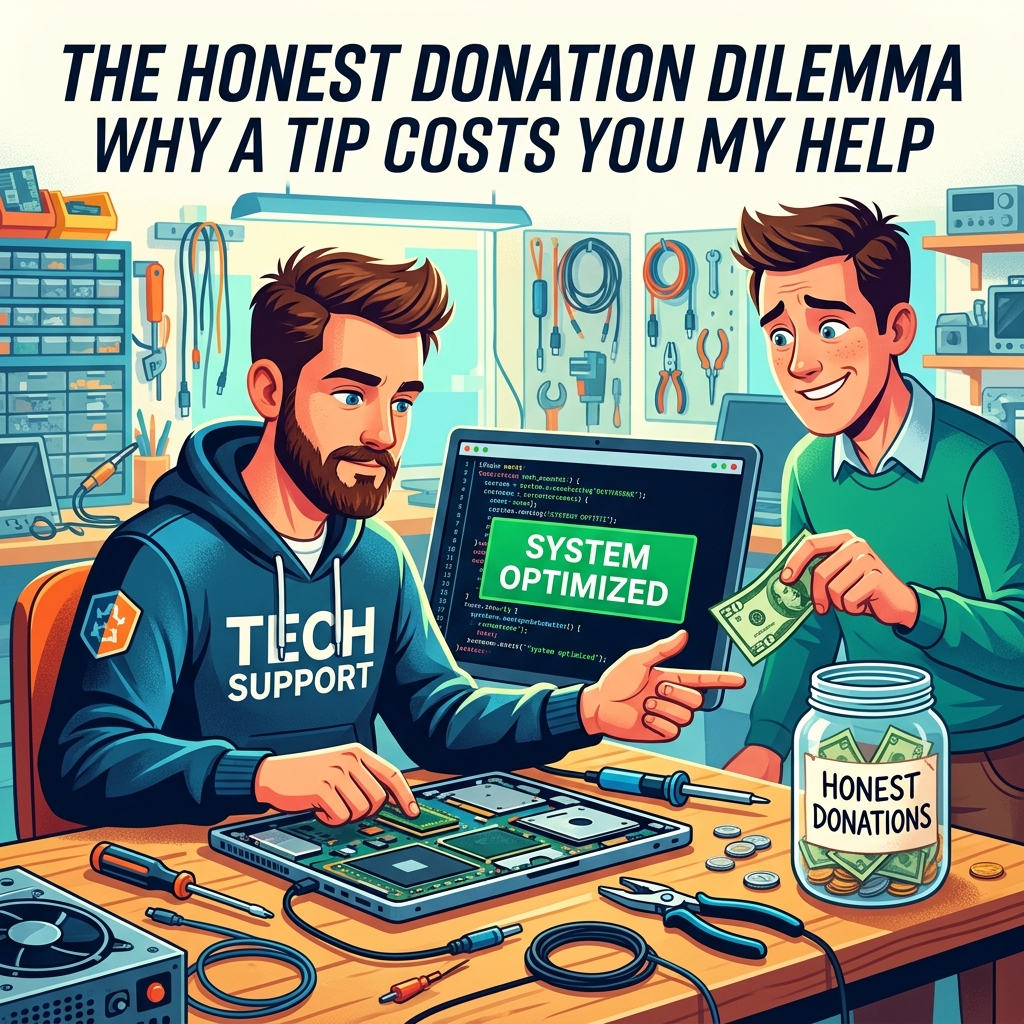
The Honest Donation Experiment
Every now and then, I like to do favors for people. I’ll swing by, clean up a bogged-down computer, clear out the bloatware, and have the system running like it just came out of the box.
I don’t drop a rigid invoice on them or demand a steep hourly rate. Instead, I use a simple system: pay me an honest donation based on what the work and your time are worth to you.
When you spend 35 minutes fixing a machine that was practically unusable, the results speak for themselves. The computer is snappy again, the frustration is gone, and the owner is thrilled. But that’s usually where the experiment gets interesting—because “honest donations” reveal a lot about how people value other people’s time and expertise.
The Two Types of Donators
The Generous Client
Sometimes, a client hands over $125 for that half-hour of work. They recognize that while I was only there for 35 minutes, they aren’t just paying for my time; they’re paying for the years of technical skill it took me to fix their problem in 35 minutes instead of three days. They are happy, I am happy, and the door stays wide open for future house calls.
The Bargain Hunter
Then, there is the other person.
The person who watches their computer get saved from the brink of death, smiles, and hands over a $20 bill.
Now, technically, $20 is a donation. It fits the literal rules of the agreement. But let’s be real—it’s a slap in the face for skilled labor. It tells me that the person values quick, reliable technical help at less than the cost of a fast-food meal deal.
The Unspoken Consequence
The Hidden Tax on Being Cheap
Here’s the hidden tax on being cheap: I never go back.
Why “Cheap” Costs More Later
When that same person inevitably clicks a bad link six months later or gets hit with malware, my calendar is suddenly full. My phone goes to voicemail. The $20 “bargain” they thought they got ended up costing them the only reliable tech support they had on call.
The Bottom Line
Working on an honest donation basis isn’t an invitation to take advantage of someone—it’s a test of mutual respect. When you pay people fairly for their skill, you aren’t just paying for a quick fix today; you’re securing their help for tomorrow.